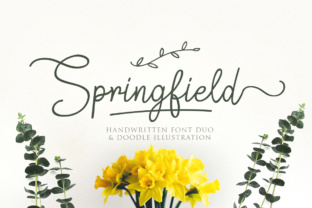
Springfield: A Versatile Font Duo for Creative Typographic Design
Springfield is a font duo that combines two distinct typefaces, offering a unique blend of elegance and creativity. Designed with a set of 20 complimentary doodles, this font pair provides users with the flexibility to craft visually appealing typographic designs quickly and efficiently. Whether you're a designer, a marketer, or someone looking to enhance your visual content, Springfield presents an intriguing option worth considering.
What Is Springfield?
Springfield is a handcrafted font duo that consists of two complementary typefaces. The design incorporates subtle, hand-drawn elements that add character and personality to any text. Alongside the main font styles, the package includes 20 doodle illustrations, which can be used to embellish and enhance typographic compositions. This combination makes Springfield particularly useful for projects that require a more personal, artistic touch.
The font is ideal for use in graphic design, branding, editorial layouts, and digital media. Its clean yet expressive style allows it to work well in both print and online formats. Springfield's versatility makes it suitable for a wide range of applications, from logos and headings to social media graphics and presentations.
Why Consider Springfield?
For individuals or businesses seeking a distinctive visual identity, Springfield offers a compelling choice. The font's unique aesthetic can help differentiate a brand or project from others that rely on more conventional typefaces. Its doodle elements provide additional creative freedom, allowing designers to experiment with different visual styles without the need for external assets.
One of the primary reasons someone might be interested in Springfield is its ease of use. Unlike some complex font families that require extensive customization, Springfield is designed to be intuitive. The font pair is ready to use out of the box, making it accessible even to those with limited design experience.
Additionally, Springfield's handcrafted nature appeals to creators who value authenticity and individuality. In a world where many designs rely on generic, mass-produced fonts, Springfield offers a refreshing alternative that can bring a sense of warmth and originality to a project.
Benefits and Tradeoffs
One of the key benefits of Springfield is its ability to add a personal touch to any design. The font's stylized letters and accompanying doodles allow for greater creative expression, making it ideal for projects that aim to convey a specific mood or message. Its compatibility with various design software also enhances its usability across different platforms.
However, there are tradeoffs to consider. While the font's unique style is a strength, it may not be suitable for all types of projects. For instance, in formal or professional settings, the casual nature of Springfield could be perceived as unprofessional. It is important to evaluate whether the font aligns with the tone and purpose of the intended design.
Another consideration is the font's readability. While Springfield is visually appealing, its stylized elements may affect legibility in certain contexts. Users should test the font in different sizes and formats to ensure it meets their needs. Additionally, the inclusion of doodles adds a layer of complexity that may require careful integration to avoid overwhelming the overall design.
Situations Where Springfield Excels
Springfield is particularly well-suited for creative projects that benefit from a custom, handcrafted feel. It works well for branding initiatives that aim to stand out, such as boutique businesses, independent artists, or small-scale publications. The font's doodle elements can also be useful in educational materials, children's books, or interactive media where visual engagement is key.
For designers working on digital campaigns or social media content, Springfield offers a quick and effective way to create eye-catching visuals. Its versatility allows it to be used in a variety of formats, including banners, posters, and web headers. The font's adaptability makes it a valuable tool for those looking to maintain a cohesive visual theme across multiple platforms.
When Alternatives May Be Better
While Springfield has its advantages, there are situations where other fonts may be more appropriate. For example, in corporate or high-stakes environments, a more traditional and neutral typeface might be preferred to convey professionalism and reliability. In these cases, alternatives like Helvetica, Times New Roman, or Arial could be better suited to the task.
Additionally, for projects that require a high level of legibility, such as long-form text or signage, a simpler font may be more practical. Springfield's decorative elements could interfere with readability in such scenarios. Users should also consider the target audience when choosing a font, as different demographics may respond differently to stylistic choices.
Decision-Making Insights
When deciding whether to use Springfield, it's important to assess the goals and context of the project. Ask yourself: What message do I want to convey? Who is my audience? What visual style will best support my objectives? These questions can help determine if Springfield is the right fit.
Testing the font in real-world scenarios is also recommended. Experiment with different layouts, sizes, and color combinations to see how Springfield performs in various conditions. This process can reveal potential issues and highlight the font's strengths.
Finally, consider the availability of the font and its licensing terms. Ensure that the font is compatible with your design software and that you have the necessary permissions for your intended use. Understanding these factors can prevent unexpected challenges down the line.
Conclusion
Springfield is a versatile and expressive font duo that offers a fresh approach to typographic design. Its combination of stylized letters and doodle elements makes it a valuable resource for creative projects that require a personal and artistic touch. However, its suitability depends on the specific needs and goals of the user.
By carefully evaluating the benefits, tradeoffs, and contextual considerations, users can determine whether Springfield aligns with their design objectives. Whether it's the perfect choice or a stepping stone toward another font, understanding the options available helps ensure that the final outcome meets both aesthetic and functional requirements.