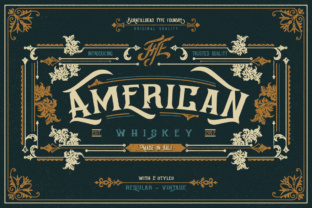
American Whiskey: A Timeless Font for Modern Design
When it comes to typography, the right font can elevate a design from ordinary to extraordinary. American Whiskey is one such typeface that captures the essence of vintage charm while maintaining a modern sensibility. This retro-inspired font has gained attention for its ornate details and distinctive character, making it a compelling choice for designers looking to add a touch of sophistication to their work.
Designed with a focus on visual appeal, American Whiskey blends elements of classic serif fonts with a more stylized approach. Its unique structure allows it to stand out in both print and digital formats, offering a versatile solution for a variety of creative projects. Whether used as a headline or a decorative element, this font brings a sense of history and elegance that few others can match.
Key Characteristics of American Whiskey
American Whiskey is defined by its intricate detailing and refined aesthetic. The font features subtle flourishes and consistent stroke weights that give it a handcrafted feel. These characteristics make it ideal for designs that require a sense of authenticity and timelessness.
The font’s letterforms are carefully balanced, ensuring readability even at smaller sizes. While it may not be the best choice for body text, its strength lies in its ability to command attention when used as a title or heading. The contrast between thick and thin strokes adds depth and visual interest, making it a powerful tool for branding and editorial design.
One of the standout features of American Whiskey is its versatility. It works well in both digital and print media, adapting seamlessly to different contexts. Whether applied to a website header, a logo, or a magazine cover, it maintains its integrity and visual impact.
Practical Applications and Real-World Use
Designers often turn to American Whiskey for projects that require a nostalgic or upscale feel. It is particularly effective in industries such as hospitality, fashion, and entertainment, where a strong visual identity is essential. For example, a boutique hotel might use the font for its signage or marketing materials to evoke a sense of old-world charm.
In the realm of branding, American Whiskey can help establish a unique voice. Its ornate style makes it suitable for businesses aiming to convey tradition, craftsmanship, or exclusivity. However, it is important to consider the target audience—while some may appreciate its vintage flair, others may find it too formal or outdated for certain applications.
For web designers, the font can be used effectively in headings and banners, adding a layer of sophistication without overwhelming the user experience. When paired with simpler typefaces, it creates a harmonious balance that enhances overall design cohesion.
Strengths and Usability
American Whiskey excels in situations where visual impact is a priority. Its distinctiveness ensures that it stands out in a crowded design landscape, making it a valuable asset for creatives seeking to differentiate their work. The font’s high level of detail also contributes to its perceived quality, reinforcing a sense of craftsmanship and care.
Usability is another key factor. While it may not be the most practical choice for long paragraphs, its performance in short, impactful text is exceptional. This makes it ideal for titles, logos, and other design elements where clarity and style are equally important.
Consistency is a hallmark of American Whiskey. Each letter is designed with precision, ensuring that the font maintains a cohesive look across different sizes and formats. This reliability makes it a dependable option for designers who value uniformity in their work.
Who Benefits Most from American Whiskey?
Professionals in the creative industry, including graphic designers, marketers, and content creators, will find American Whiskey to be a useful addition to their typographic toolkit. Its ability to convey a specific mood or tone makes it particularly appealing for those working on projects with a historical or artistic theme.
Entrepreneurs and small business owners may also benefit from using this font in their branding efforts. By incorporating American Whiskey into their logos or promotional materials, they can create a memorable and distinctive visual identity that resonates with their target audience.
For educators and publishers, the font can be a valuable resource when designing educational materials or publications that require a touch of elegance. Its ornate style can enhance the presentation of content, making it more engaging and visually appealing.
Considerations and Limitations
Despite its many strengths, American Whiskey is not without its limitations. Its ornate design may not be suitable for all types of projects, particularly those that require a more minimal or functional approach. In such cases, a simpler font may be more appropriate.
Additionally, designers should be mindful of how the font performs in different languages and scripts. While it is primarily designed for English, its effectiveness in other languages may vary depending on the specific characters and layout requirements.
Another consideration is the availability of the font. Depending on the platform or software being used, access to American Whiskey may be limited. Designers should verify compatibility before incorporating it into their workflow.
Final Thoughts
American Whiskey is more than just a font—it is a statement. Its blend of vintage charm and modern design makes it a compelling choice for those looking to add a touch of sophistication to their work. Whether used in branding, editorial design, or digital media, it offers a unique visual identity that can set a project apart.
For professionals and creatives who value style and substance, American Whiskey provides a powerful tool for expressing their vision. However, like any design element, its success depends on thoughtful application and an understanding of its strengths and limitations. When used appropriately, it can transform a simple design into something truly memorable.