Paladise: A Playful Yet Cool Font for Creative Expression
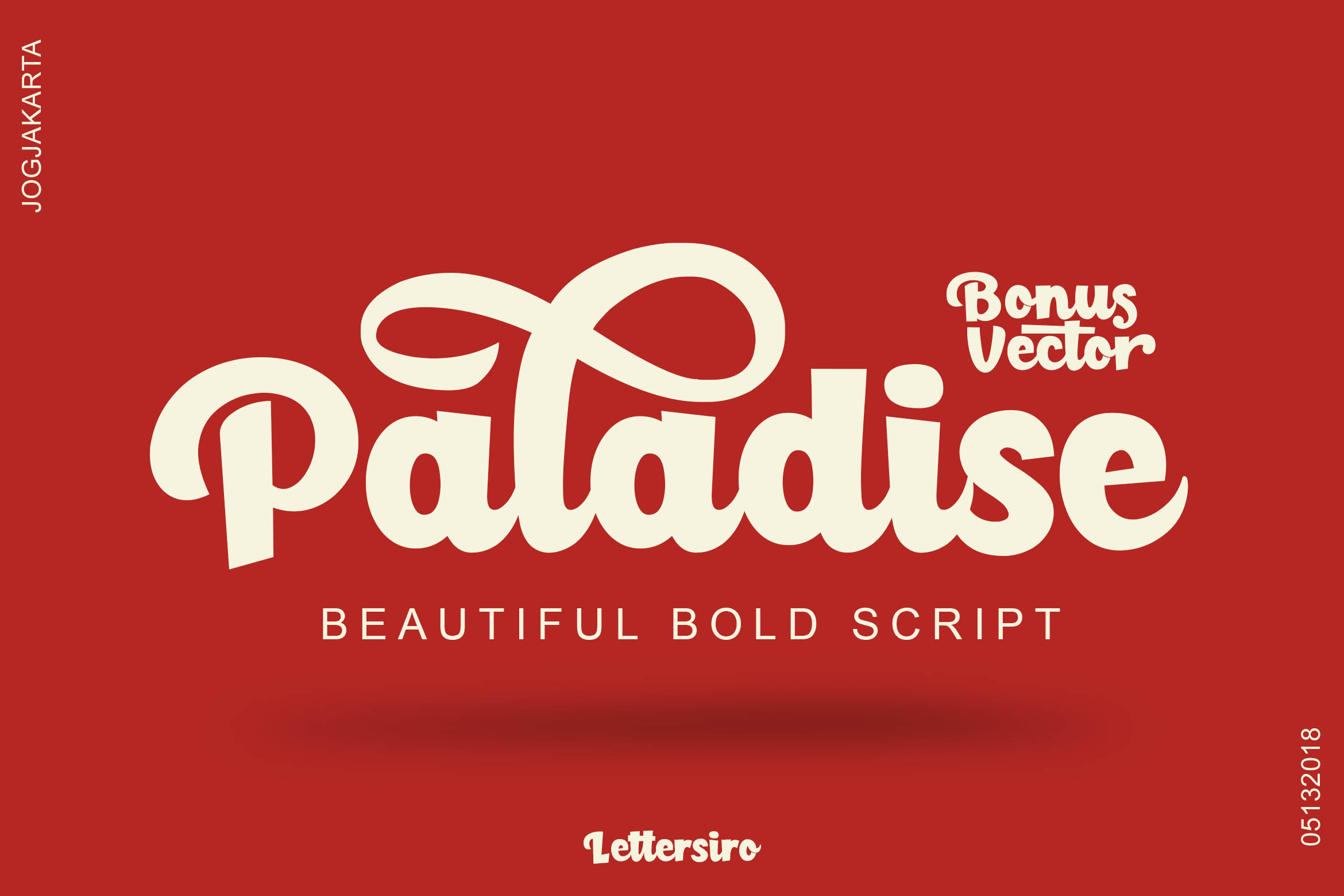
In the world of typography, fonts serve as more than just a means of communication—they are tools of expression, identity, and emotion. Among the many typefaces available, Paladise stands out as a unique blend of playfulness and sophistication. This display script font brings a bouncy, energetic style that can instantly elevate any design project. Whether you're crafting a logo, designing a website, or creating marketing materials, Paladise offers a distinctive visual flair that captures attention and conveys personality.
The appeal of Paladise lies in its ability to balance whimsy with professionalism. Its fluid, flowing characters give it a sense of movement, making it ideal for projects that require a touch of creativity without sacrificing clarity. The font’s structure is carefully crafted to maintain readability while still delivering a bold, stylized appearance. This makes it particularly useful in contexts where a strong visual impact is needed, such as branding, packaging, or digital media.
Key Characteristics of Paladise
One of the standout features of Paladise is its dynamic, bouncy style. Each letterform has a slight curve and lift that gives the font a lively, almost animated feel. This characteristic makes it especially well-suited for designs that aim to convey energy, fun, or innovation. Unlike more rigid serif or sans-serif fonts, Paladise adds a sense of motion and spontaneity that can differentiate a design from the competition.
Another notable aspect of Paladise is its versatility. While it is primarily a display font, it can be used effectively in a variety of settings when paired correctly. For instance, it works well as a headline or title in web design, where it can draw attention without overwhelming the reader. When used in conjunction with simpler, more neutral fonts for body text, it can create a visually balanced composition that maintains readability while adding a creative edge.
The font also includes 26 bonus vectors, which expand its functionality beyond standard text. These additional elements allow designers to incorporate decorative flourishes, icons, or other graphical components directly into their work. This feature is particularly valuable for those looking to create cohesive, stylized designs without relying on external graphics or illustrations.
Practical Applications of Paladise
Paladise is most commonly used in branding and logotype design. Its playful yet professional appearance makes it an excellent choice for businesses aiming to establish a memorable and distinctive identity. From tech startups to boutique shops, companies across various industries have adopted Paladise to craft logos that stand out in a crowded market. The font’s ability to convey both creativity and reliability helps brands communicate their values effectively to their target audience.
In addition to branding, Paladise is frequently used in digital media and web design. As a display font, it can enhance the visual appeal of websites, social media posts, and online advertisements. When used as a headline or subheading, it adds a sense of energy and personality that can engage users and encourage them to explore further. Its bouncy style also makes it a popular choice for creative portfolios, where visual storytelling is key.
For print materials, Paladise can add a unique touch to business cards, brochures, and promotional flyers. Its stylized appearance helps these materials catch the eye and leave a lasting impression. However, it is important to use the font judiciously in print, as overuse or improper sizing can reduce legibility. Designers should experiment with different weights and sizes to find the optimal balance between aesthetics and readability.
Considerations for Using Paladise
While Paladise is a powerful tool for creative expression, it is not suitable for every design project. Its stylized nature may not align with the tone or purpose of more formal or traditional work. In such cases, a more conservative font might be more appropriate. Designers should consider the context in which the font will be used and ensure that it complements the overall message and aesthetic of the project.
Another consideration is the font’s performance in different mediums. On digital platforms, Paladise renders smoothly and maintains its visual integrity across various screen sizes. However, when used in print, it is essential to test the font at different sizes to ensure that it remains clear and legible. Additionally, designers should verify that the font is properly licensed for commercial use, as some fonts may have restrictions on their distribution or application.
Finally, while Paladise is a standalone font, it often works best when combined with other typefaces. Pairing it with a simple, clean font for body text can create a harmonious design that balances creativity with readability. This approach allows the font to shine without overshadowing the rest of the content. Experimentation is key—designers should test different combinations to find the right balance for their specific needs.
Why Paladise Stands Out
What sets Paladise apart from other display fonts is its ability to merge playfulness with professionalism. It avoids the pitfalls of being too informal or too rigid, instead offering a middle ground that appeals to a wide range of audiences. This balance makes it a versatile choice for designers who want to add a unique touch to their work without compromising on quality or clarity.
Moreover, the inclusion of 26 bonus vectors enhances the font’s utility, allowing designers to integrate additional elements seamlessly into their projects. This feature reduces the need for separate graphics or illustrations, streamlining the design process and ensuring a cohesive look. Whether used for small-scale projects or large-scale branding efforts, Paladise provides a level of customization and flexibility that few other fonts offer.
As the demand for visually engaging content continues to grow, fonts like Paladise are becoming increasingly valuable. They enable designers to create work that not only communicates information but also evokes emotion and captures attention. In a world where first impressions matter, the right font can make all the difference in how a message is received and remembered.